Share
Payroll is one of those essential functions that tends to fade quietly into the background when it’s working properly. Paychecks go out. Employees don’t complain. Nothing appears to be on fire. From a finance perspective, that can feel like success.
But many payroll-related risks do not surface immediately. Instead, they tend to develop gradually and remain hidden within assumptions, manual procedures, and legacy systems. These systems may technically function, but not particularly well.
By the time a payroll-related risk surfaces, the issue has often created additional costs in time, money, and internal resources compared to the effort that would have been required to address the risk earlier.
Below are seven common payroll-related risks that are underestimated by CFOs each year.
It’s not due to carelessness. It happens because these risks are easy to overlook when everything appears to be operating properly.
1. Classification Decisions That Never Get Revisited
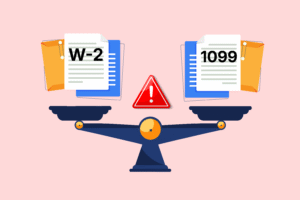
Once a decision is made regarding whether a role is classified as exempt or non-exempt, an employee or an independent contractor, that decision is often left unchanged. Even as roles, responsibilities, and schedules evolve over time, classifications frequently remain the same.
As a result, the potential for classification errors increases over time. Examples of classification-related determinations include:
- Whether an employee is entitled to overtime
- Whether an employee is eligible for benefits
- Whether an independent contractor is entitled to rights provided to employees
Misclassifications may seem insignificant at the time they occur. However, the consequences can become serious when they are discovered years later. This is not unusual, which is part of why it often goes unaddressed.
2. Overtime Creep
Overtime rarely occurs suddenly or without warning. Instead, it typically develops gradually and accumulates over time. This can come up for a variety of reasons and in a host of scenarios, including some that initially feel temporary.
These may include extra hours worked during a busy week, employees covering for absences, or workloads that slowly increase. This is often noticed in hindsight, which is usually too late to prevent it from becoming part of regular operations. By that point, it’s usually harder to unwind than anyone expects.
Unless an organization has clear guidelines for tracking and reporting overtime, these hours can accumulate quietly and become a meaningful expense before anyone realizes overtime is occurring.
3. Workarounds That “Almost” Work
Payroll departments often rely on workarounds to compensate for limitations in payroll software. These workarounds may include:
- Using spreadsheets to calculate payroll amounts
- Manually adjusting payroll figures
- Pulling data from multiple systems and reconciling it manually
While workarounds can be effective in certain situations, they also increase the likelihood of errors. Over time, continued reliance on workarounds makes it more difficult to explain how payroll numbers were calculated when questions arise.
4. Inconsistencies in Timekeeping
Timekeeping may appear consistent on paper but vary in practice. For example: timekeeping processes may differ between departments or managers. While policies may be intended to be consistent, actual practices may not accurately reflect hours worked.
These inconsistencies increase the risks related to the accuracy of reported hours and the fairness of overtime calculations.
5. Failure to Implement Payroll-Related Changes
Payroll laws and regulations change. Tax rates change. Wage and hour requirements change. The risk is not always failing to receive notice of these changes, but assuming that payroll systems and procedures will automatically adjust.
When payroll-related changes are not implemented in a timely manner, errors may occur unintentionally. Correcting these errors can require retroactive adjustments, amended filings, and additional administrative work.
6. Assuming Year-End Cleanup is Sufficient
Many organizations rely on year-end cleanups to identify and correct payroll errors. However, relying solely on year-end reviews can create a false sense of security.
Errors that occur throughout the year still introduce risk, even if they are corrected later. In addition, year-end cleanup efforts often divert time and resources away from more strategic financial activities.
7. Failing to Recognize The Time Cost of Payroll Errors
In addition to financial risk, payroll errors also create time-related costs. Time is spent responding to employee questions, investigating discrepancies, recreating records, and explaining payroll corrections after the fact.
While this time is not always formally tracked, it can affect productivity across finance, human resources, and operations teams.
Why Payroll Risks Continue to Exist
Most payroll risks persist because they do not draw immediate attention. Payroll runs. Employees are paid. Nothing breaks in an obvious way.
As organizations grow, payroll becomes more complex. More employees, more locations, and more rules increase the likelihood of issues. Without systems designed to support this complexity, payroll risks tend to develop quietly behind the scenes.
For many CFOs, this is the central challenge. Payroll must be reliable and scalable, and processes that work at one stage of growth may not work as well at the next.
Where Systems Can Help
Reducing payroll-related risk typically involves minimizing manual work and improving visibility.
Systems that integrate payroll, human resources, and timekeeping generally make it easier to apply rules consistently, track changes over time, and generate reports that reflect what actually occurred.
To see how Netchex helps teams reduce payroll risk through better visibility, automation, and support, you can request a quote or schedule your demo to learn more.
Related articles

The 5 Best Payroll Software Platforms for Restaurants
The True Cost of Payroll Errors

Top 5 Payroll Mistakes in Franchises