Share
Key Takeaways
- Payroll in HRM is the end-to-end process of compensating employees accurately and on time while complying with labor and tax regulations.
- Payroll is a foundation of employee trust and company culture: one missed or incorrect paycheck can damage morale and retention.
- Modern HR teams rely on integrated HRIS and payroll systems instead of manual spreadsheets, especially since the rise of remote work after 2020.
- HR owns the employee life cycle data, while payroll converts that data into compliant, precise payments—understanding this handoff is critical.
- This article provides HR professionals a practical walkthrough of payroll components, processes, technology choices, and best practices.
Introduction: Why Payroll Matters in Human Resource Management
It was July 2024. A mid-sized marketing agency in Austin processed payroll like they always did. Except this time, a classification error meant 12 employees received overtime pay they weren’t owed—and 8 others didn’t get the overtime they’d earned.
The fallout was immediate. Three employees filed complaints. Two others updated their LinkedIn profiles within the week. The HR manager spent the next month fixing records, fielding questions, and rebuilding trust that took years to establish.
Payroll mistakes don’t stay quiet. They ripple through morale, turnover, and legal risk faster than almost any other HR error.
Yet payroll is often treated as a background task. Something that happens in the back office. Something that “just works.” In reality, payroll sits at the core of HR’s responsibility to employees. It’s the most tangible promise an employer makes: work here, and we’ll pay you accurately and on time.
In most organizations, payroll is either housed directly within HR or tightly integrated with HR, finance, and compliance teams. This article focuses on practical payroll in human resource management, with examples drawn primarily from U.S. employers with 10–500 employees, including those with hybrid or fully remote teams. By the end, you’ll understand the key components, processes, technology options, and best practices that make payroll work—or fail.
The Role of Payroll in HR: Beyond Just Paychecks
Payroll is both an administrative function and a strategic one. It’s where HR’s people-focused mission meets the precision of numbers, deadlines, and government agencies.
Accurate, predictable pay underpins psychological safety at work. Employees who trust they’ll be paid correctly are more engaged, more productive, and more likely to recommend your company to others. Glassdoor reviews that mention “always paid on time” aren’t accidents—they reflect organizations where payroll runs smoothly.
The connection between payroll and HR processes runs deep. Recruitment offers include salary figures that payroll must honor. Onboarding dates determine when new hires enter the payroll system. Promotions trigger rate changes. Terminations require final pay calculations, often with state-specific deadlines. Every stage of the employee life cycle touches payroll.
For hourly employees and frontline workers living paycheck to paycheck, payroll accuracy influences retention directly. A single error—a missed shift differential, incorrect overtime pay, or delayed direct deposit—can push someone to look elsewhere. Employee morale depends on getting this right.
Consider a typical monthly HR calendar. In the first week, you might close the previous month’s time records and run payroll calculations. Mid-month brings benefits enrollment deadlines. The third week might include performance review submissions. Throughout, payroll deadlines align with everything else HR manages. Miss one, and the whole calendar shifts.

What Is Payroll in Human Resource Management?
Payroll in human resource management is the complete process of calculating, distributing, and recording employee compensation and statutory deductions.
But in HRM, payroll isn’t just issuing checks. It includes maintaining employee records, handling benefits deductions, processing wage garnishments, and managing tax filings. The payroll department doesn’t work in isolation—it depends on accurate employee data flowing from HR systems.
HR provides the “people data” that payroll converts into payments. This includes job titles, pay grades, FLSA classification (exempt or non-exempt), hours worked, and work location. Without accurate inputs, even the best payroll software produces incorrect outputs.
Understanding the difference between gross pay, net pay, and total compensation matters for payroll management.
Gross pay is what an employee earns before any deductions. A salaried employee earning $60,000 annually has gross pay of $5,000 per month.
Net pay is what lands in their bank account after deductions. If that same employee pays $400 in federal income tax, $310 in FICA taxes, and $200 in health insurance premiums, their net pay is $4,090.
Total compensation includes benefits and employer-paid costs the employee may not see on their paycheck—health insurance premiums paid by the employer, retirement plan matching, and employer payroll taxes like Social Security and Medicare contributions.
Consider two employees: a salaried worker in California earning $75,000 annually versus an hourly employee in Texas earning $20 per hour. The California employee deals with state income tax withholding. The Texas employee has no state income tax but must track hours precisely for overtime pay calculations. Both require different payroll configurations, even for the same employer.
Core Components of Payroll in HR
Each paycheck is the result of several building blocks HR must manage correctly. Understanding these components helps HR professionals catch errors before they reach employees.
Base Pay forms the foundation. This includes salary for exempt employees and hourly pay for non-exempt workers. For hourly employees, calculating employee wages requires accurate time tracking. Overtime pay applies to non-exempt workers at 1.5 times their regular rate for hours beyond 40 in a workweek under FLSA rules. Some roles include shift differentials—extra pay for nights, weekends, or holidays. Commissions and bonuses add another layer, with some bonuses being discretionary and others guaranteed by employment contracts.
Statutory Deductions are legally mandated. Federal income tax withholding depends on the employee’s W-4 form. Social Security tax takes 6.2% of wages up to an annual cap, while Medicare taxes take 1.45% with no cap (plus an additional 0.9% surtax for high earners). State and local taxes vary by location—some states have no income tax, while cities like New York add their own withholding. The federal government requires these deductions, and employers must remit them on schedule.
Employer Contributions don’t appear on employee paystubs but matter for total compensation. Employers match FICA taxes (6.2% Social Security, 1.45% Medicare). The Federal Unemployment Tax Act requires employer contributions to unemployment insurance. State unemployment taxes add to employer costs.
Voluntary Deductions require employee elections and HR coordination. Health insurance premiums, retirement plans like 401(k) contributions, flexible spending accounts, and union dues all reduce gross pay. These deductions often require pretax treatment, which affects taxable income calculations.
Non-Standard Items complicate payroll calculations. Expense reimbursements, one-time bonuses, retroactive pay adjustments for promotions, and wage garnishments (court-ordered deductions for child support or debts) all require special handling. Each item needs proper documentation and approval before processing payroll.
How the Payroll Process Works Inside HR
Payroll in HR runs on a repeating cycle. Whether weekly, biweekly, semimonthly, or monthly, each cycle follows the same fundamental stages with specific calendar cutoffs and approval steps.
The Preparatory Phase happens before any calculations begin. HR and managers collect attendance data and verify time records. This includes confirming hours worked, approved overtime, and any leave taken. New hires need to be added to the system with completed tax forms and direct deposit information. Promotions, transfers, and terminations must be processed. Any changes to employee benefits enrollment need to be captured before the cutoff.
The Calculation Phase applies pay rates, overtime rules, differentials, bonuses, and deductions based on each employee’s location and classification. Payroll calculations must account for different tax jurisdictions—a remote employee in Oregon has different withholding requirements than one in Florida. The payroll system calculates gross pay, subtracts statutory and voluntary deductions, and determines net pay.
The Review and Approval Phase catches errors before they reach employees. HR and finance teams verify exception reports, looking for anomalies like unusually high overtime, unexpected rate changes, or missing time entries. Discrepancies get resolved through communication with managers and employees. This step prevents payroll errors that damage employee relations and create compliance issues.
The Payment and Post-Payroll Phase executes the actual distribution of employee payments. For most organizations, this means funding direct deposit transactions. Pay statements go out to employees, whether electronically through employee self service portals or on paper. Payroll entries post to the general ledger for accounting purposes. Tax payments get deposited or scheduled with appropriate government agencies. Finally, required payroll reports get filed—this might include quarterly 941 forms or state-specific filings.

HR vs. Payroll: Responsibilities and Collaboration
HR and payroll often overlap, but they have distinct primary objectives. HR focuses on people management—hiring, developing, and retaining talent. Payroll focuses on accurate payment and compliance with tax regulations.
HR responsibilities that directly feed payroll include:
- Creating job offers and finalizing employment contracts with salary terms
- Classifying employees as exempt or non-exempt
- Tracking changes in hours, schedules, or work locations
- Managing benefits enrollment and changes
- Approving leave requests and tracking PTO balances
- Processing terminations and determining final pay requirements
Payroll responsibilities include:
- Running payroll calculations based on HR-provided data
- Managing tax withholding and remittances to government agencies
- Producing pay statements and generating payroll reports
- Filing required tax forms (W-2s, quarterly returns)
- Handling direct deposit processing
Different organizational models exist for managing payroll. Some companies maintain separate HR and payroll teams, often with payroll reporting to finance. Others use hybrid shared-service models where payroll professionals sit within HR but collaborate closely with accounting. Increasingly, companies use integrated HR and payroll platforms where the same system handles both functions, reducing data entry and errors.
Consider this scenario: An employee gets promoted in March 2025. HR approves the new title, updates the job grade, and confirms the salary increase. If this information doesn’t flow correctly to payroll by the cutoff date, the employee receives their old salary. The employee notices immediately. Trust erodes. HR spends hours fixing the error and processing retroactive pay.
Clear handoffs and integrated payroll systems prevent these problems.
Compliance and Risk Management in HR Payroll
Payroll is one of HR’s highest-risk areas for audits, penalties, and lawsuits. Mismanaged payroll creates exposure to federal and state enforcement, employee complaints, and costly corrections.
Labor law considerations touch every paycheck. Minimum wage varies by state and locality—employers must apply the highest applicable rate. Overtime rules require 1.5 times regular pay for non-exempt employees working over 40 hours weekly. Classification errors between exempt and non-exempt status trigger frequent lawsuits. The current salary threshold for exemption under FLSA is $684 per week (approximately $35,568 annually), following a 2019 rule that remains in effect after a 2024 update was vacated by a federal court. Misclassifying employees as independent contractors creates significant liability.
Tax compliance duties require ongoing attention. Employers must register with the IRS and state agencies, obtain appropriate EINs, and file forms like W-2, W-3, and quarterly 941 returns. State tax filings add complexity, especially for companies with employees in multiple states. Deadlines matter—late tax filings result in penalties and interest.
Recordkeeping requirements have legal minimums. Under FLSA, employers must retain basic payroll records for at least three years. Records used for wage computations (time cards, rate tables, schedules) require two years of retention. The IRS requires employment tax records be kept for at least four years after filing the relevant return.
Best practices for reducing compliance risk include:
- Documenting payroll policies and procedures
- Conducting regular internal audits of classification and calculations
- Staying updated on federal, state, and local regulations
- Consulting legal and tax professionals when laws change
- Using payroll software that receives automatic regulatory updates
Payroll Systems and Technology for HR Teams
Technology has transformed payroll from paper checks and spreadsheets to cloud-based, integrated platforms. Since around 2015, payroll management systems have become increasingly sophisticated, handling complexity that would overwhelm manual processes.
Common system options range from basic to comprehensive:
- Basic payroll software handles calculations, tax withholding, and direct deposit but may require manual data entry and separate systems for other HR functions
- Full HRIS with integrated payroll combines recruiting, onboarding, benefits, performance management, and payroll in one platform
- Industry-specific solutions optimize for particular needs—hospitality systems handle variable schedules, healthcare systems manage complex shift differentials
Key features HR should evaluate when selecting payroll management software include:
- Automated tax updates that reflect changing federal, state, and local taxes
- Employee self service portals for accessing pay stubs, updating tax forms, and changing direct deposit information
- Integration with time-tracking tools for automatic import of attendance data
- Anomaly alerts that flag unusual patterns before payroll runs
- Robust reporting for generating payroll reports and analytics
- Multi-state and multi-jurisdiction support for distributed teams
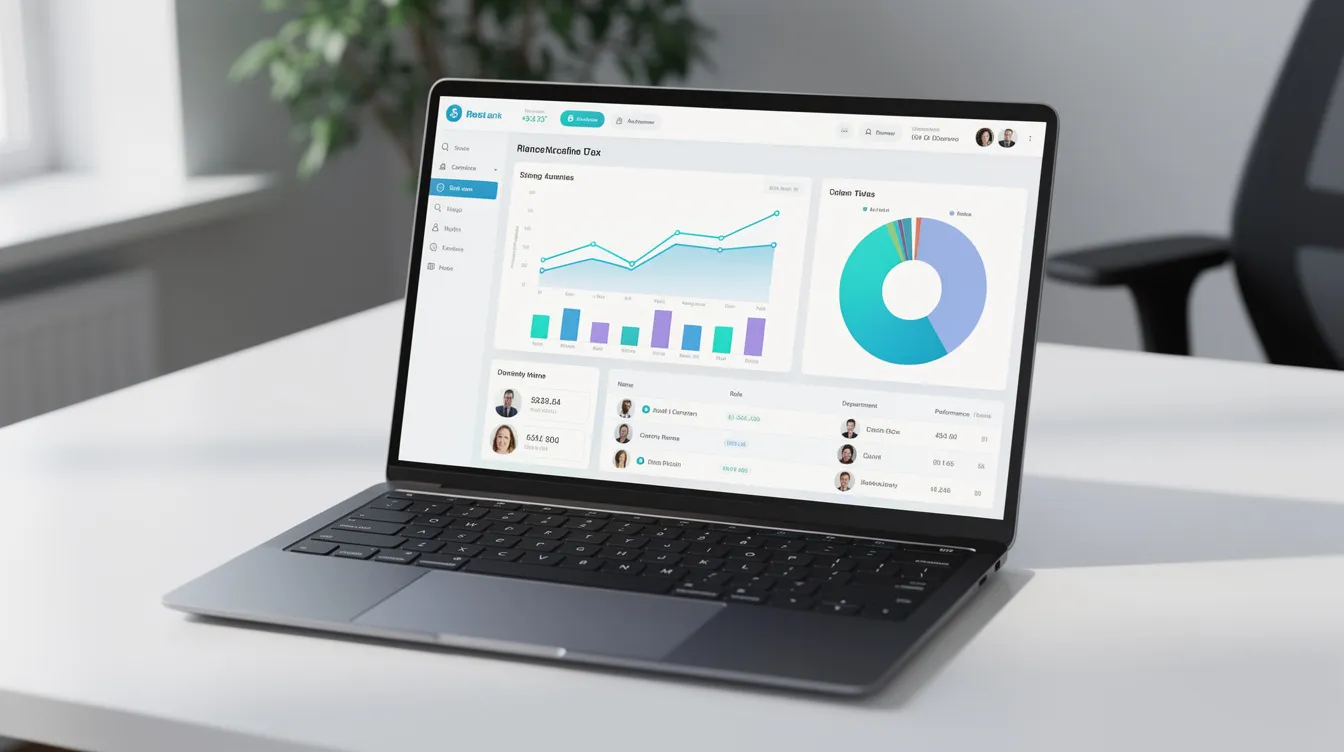
Integration benefits become clear as companies grow. When a new hire’s record created in HR automatically flows into payroll—including tax forms, banking details, benefits elections, and classification—manual re-entry disappears. Errors drop. Payroll teams spend less time on data entry and more time on review and compliance.
Consider this workflow: A hiring manager extends an offer through the recruiting module. The candidate accepts and completes onboarding documents electronically. Their information populates the HRIS. When their start date arrives, they appear in payroll automatically with correct classification, pay rate, and deductions. No spreadsheets. No duplicate entry. No errors from transcription mistakes.
Choosing How to Manage Payroll: In-House, Outsourced, or Hybrid
HR leaders must decide who actually runs payroll day to day. This decision affects control, cost, compliance risk, and HR workload.
In-house payroll means HR manages payroll internally using software. This approach offers maximum control over processes, timing, and employee data. It works well for companies with straightforward pay structures and dedicated payroll professionals. Organizations with 50–200 employees often find in-house payroll manageable with the right technology. The administrative burden stays internal, but so does institutional knowledge about your specific workforce.
Outsourced payroll providers handle calculations, tax filings, and deposits on your behalf. A payroll service provider like a Professional Employer Organization (PEO) can manage compliance across multiple states, reducing risk for growing companies. Payroll outsourcing makes sense when internal expertise is limited, when multi-state complexity overwhelms internal resources, or when HR wants to focus on strategic work rather than processing payroll. However, HR still needs to oversee employee data accuracy and review outputs.
Hybrid models split responsibilities. HR retains ownership of employee information and employee communication. An external payroll processor handles technical calculations, tax payments, and filing. This approach balances control with specialized expertise. It’s common among companies that want to maintain direct employee relations while offloading compliance risk.
Guidance for making the choice:
| Factor | In-House | Outsourced | Hybrid |
|---|---|---|---|
| Headcount | 50-200 employees | Any size | Any size |
| Pay structure complexity | Simple to moderate | Complex | Moderate |
| Geographic spread | Single state | Multi-state or international | Multi-state |
| Budget | Software costs | Provider fees | Balanced |
| Internal expertise | Dedicated payroll teams | Limited | Some |
The right answer depends on your specific situation. Many growing companies start in-house, then shift to hybrid or fully outsourced as complexity increases.
Best Practices for HR Professionals Managing Payroll
Well-designed payroll processes become a strategic advantage rather than just a compliance requirement. Managing payroll effectively requires discipline, documentation, and continuous improvement.
Build and maintain a documented payroll calendar. This calendar should show all cutoffs for time submissions, approval deadlines, payroll processing dates, pay dates, and tax filing deadlines. Share it with managers and employees so everyone knows when to submit information. A payroll administrator who manages by calendar rarely misses deadlines.
Implement standardized controls. Dual approvals for salary changes, rate adjustments, and unusual payments reduce errors and fraud risk. Segregation of duties—where one person enters data and another approves it—adds another layer of protection. Regular reconciliations between payroll reports and bank statements catch discrepancies quickly.
Communicate clearly with employees. Provide simple guides explaining how pay is calculated, where deductions go, how to access pay stubs through employee self service, and how to report issues. When employees understand their payroll details, they ask better questions and catch errors faster. Clear communication supports employee experience even when problems occur.
Establish error-handling procedures. When payroll errors happen—and they will—have a documented process for investigation, correction, and communication. Quick resolution matters more than perfection. Employees forgive mistakes that get fixed promptly with honest communication.
Pursue ongoing improvement. Track error rates over time. Analyze root causes of recurring problems. Use employee feedback to identify pain points. Leverage automation features and software updates as they become available. Payroll tasks that required manual intervention last year might be automated today.
Future Trends in Payroll within HR Management
Payroll is evolving rapidly with technology and new employment models emerging between 2020 and 2026. HR professionals who understand these trends can prepare their organizations for what’s coming.
Distributed and international teams create new complexity. Companies with employees across multiple states—or multiple countries—must navigate different tax jurisdictions, currencies, and local regulations. A remote employee who moves from Texas to California changes their tax obligations immediately. Integrating payroll across borders requires sophisticated systems and often specialized partners.
On-demand pay and earned wage access (EWA) are growing rapidly. The North American on-demand pay market reached approximately $5.46 billion, growing at around 14.9% annually. Younger workers show strong preference for flexible pay access—84% of Millennials and 87% of Gen Z workers prefer employers offering same-day or on-demand pay options. Advanced payroll software increasingly includes EWA capabilities.
Digital wallets and payment innovation give employees more control over how they receive wages. Beyond traditional direct deposit, some employees want payments to digital wallets or want to split payments between multiple accounts automatically.
Data and analytics transform payroll from a transaction system to a strategic tool. Payroll data reveals labor costs by department, overtime trends, turnover risk indicators, and pay equity gaps. HR management increasingly uses this data for budgeting scenarios and workforce planning.
Adaptability matters most. HR teams should select payroll tools and processes that can scale with growth, adjust to regulatory changes, and accommodate new employment models. The system that works for 50 employees may struggle at 200. The processes designed for one state may break when you hire in five states.

Conclusion: Elevating Payroll as a Strategic HR Function
Payroll, when run well, strengthens trust between employer and employee. It supports compliance with labor laws and tax regulations. It frees HR to focus on strategic talent initiatives rather than firefighting errors. Paying employees accurately and on time is the most fundamental promise an employer makes.
Payroll is not just a finance task. It is a core element of human resources, affecting every employee every pay period. The payroll function touches recruiting, onboarding, benefits, performance, and separation. It intersects with government agencies, tax authorities, and legal requirements. It generates data that informs budgeting and workforce planning.
HR leaders should regularly review their payroll processes, systems, and policies. Treat improvements here as high-impact HR projects. Small investments in better technology, clearer processes, or stronger controls pay dividends in accuracy, compliance, and employee satisfaction.
The organizations that thrive over the next decade will have payroll functions that support growth, adapt to changing laws, and meet evolving employee expectations. Start building that capability today.
FAQ
How often should HR run payroll for employees?
In the U.S., biweekly payroll is most common, used by approximately 45.7% of employers. Weekly payroll accounts for about 31.8%, semimonthly around 18%, and monthly about 4.4%. The right frequency depends on industry norms, state law requirements, and cash-flow considerations.
State payday laws impose minimum frequencies. Some states require non-exempt employees to be paid at least twice monthly. Texas, for example, allows monthly pay for exempt employees but has stricter requirements for hourly workers. HR should verify requirements in each state where employees work before establishing a pay period schedule.
What payroll tasks usually stay with HR if payroll is outsourced?
Even with a payroll service provider handling calculations and filings, HR typically retains several critical responsibilities. HR owns data accuracy—ensuring new hires are entered correctly, rate changes are processed before cutoffs, and terminations trigger appropriate final pay. Time approval oversight remains with HR and managers, not the external provider.
HR also keeps policy decisions, such as overtime approval thresholds and classification determinations. Employee communication about pay questions, deduction explanations, and error resolution typically stays internal. The payroll provider handles technical execution, but HR remains the employee-facing contact.
How long should HR keep payroll records?
Under FLSA, employers must retain basic payroll records—employee name, hours worked, pay rate, deductions, and total wages—for at least three years. Records used for wage computations, such as time cards, wage rate tables, and work schedules, require two years of retention.
For tax purposes, IRS guidelines require employment tax records be kept for at least four years after the date the tax return is filed. HR should verify requirements in their specific state, as some jurisdictions have longer retention periods. When in doubt, keeping records longer than the minimum protects against unexpected audits.
What skills does an HR professional need to manage payroll effectively?
Effective payroll management requires attention to detail above all else. Small errors in employee information, hours, or rates create significant problems downstream. Basic accounting and tax knowledge helps HR professionals understand how payroll taxes and deductions work, even when software handles calculations.
Comfort with HRIS and payroll software is increasingly essential—manual processes don’t scale. Confidentiality matters because payroll data includes sensitive employee information protected by data protection regulations. Strong communication skills help when explaining pay calculations to employees or resolving discrepancies with managers.
How can HR reduce payroll errors for remote and hybrid teams?
Remote and hybrid work creates unique payroll challenges. HR should implement reliable time-tracking tools that work across locations and time zones. Standardized processes for reporting location changes help ensure correct tax jurisdictions apply immediately when employees move.
Integrated HRIS and payroll systems reduce manual handoffs where errors typically occur. Clear cutoffs and approval deadlines—communicated to managers regardless of where they work—prevent late submissions that delay processing. For companies with employees across multiple states, working with local regulations specialists or payroll outsourcing partners reduces compliance risk.
Related events

The Payroll Reports You Still Build By Hand Every Cycle

Netchex vs. Workday: Which HR and Payroll Platform Is Right for Your Business in 2026?

Netchex vs. Inova Payroll: Which HR and Payroll Platform Is Right for Your Business in 2026?