Share
For years, HR leaders and business owners have debated one of the most important technology questions in people operations: Is it better to adopt an all-in-one HR platform or stitch together specialized, “best-of-breed” tools for each function?
This isn’t just a theoretical discussion. The choice impacts every part of HR and payroll, from onboarding efficiency and compliance confidence to employee satisfaction and cost control. It affects your IT budget, your reporting accuracy, and even your ability to make strategic workforce decisions.
In 2025, with HR technology markets booming and AI-driven tools reshaping workflows, the stakes have never been higher. The latest data show compelling benefits on both sides, but also a clear trend: more organizations are leaning toward all-in-one platforms as the central hub for HR, while using specialty tools selectively to fill gaps.
The Case for All-in-One HR Systems: Streamlined and Strategic
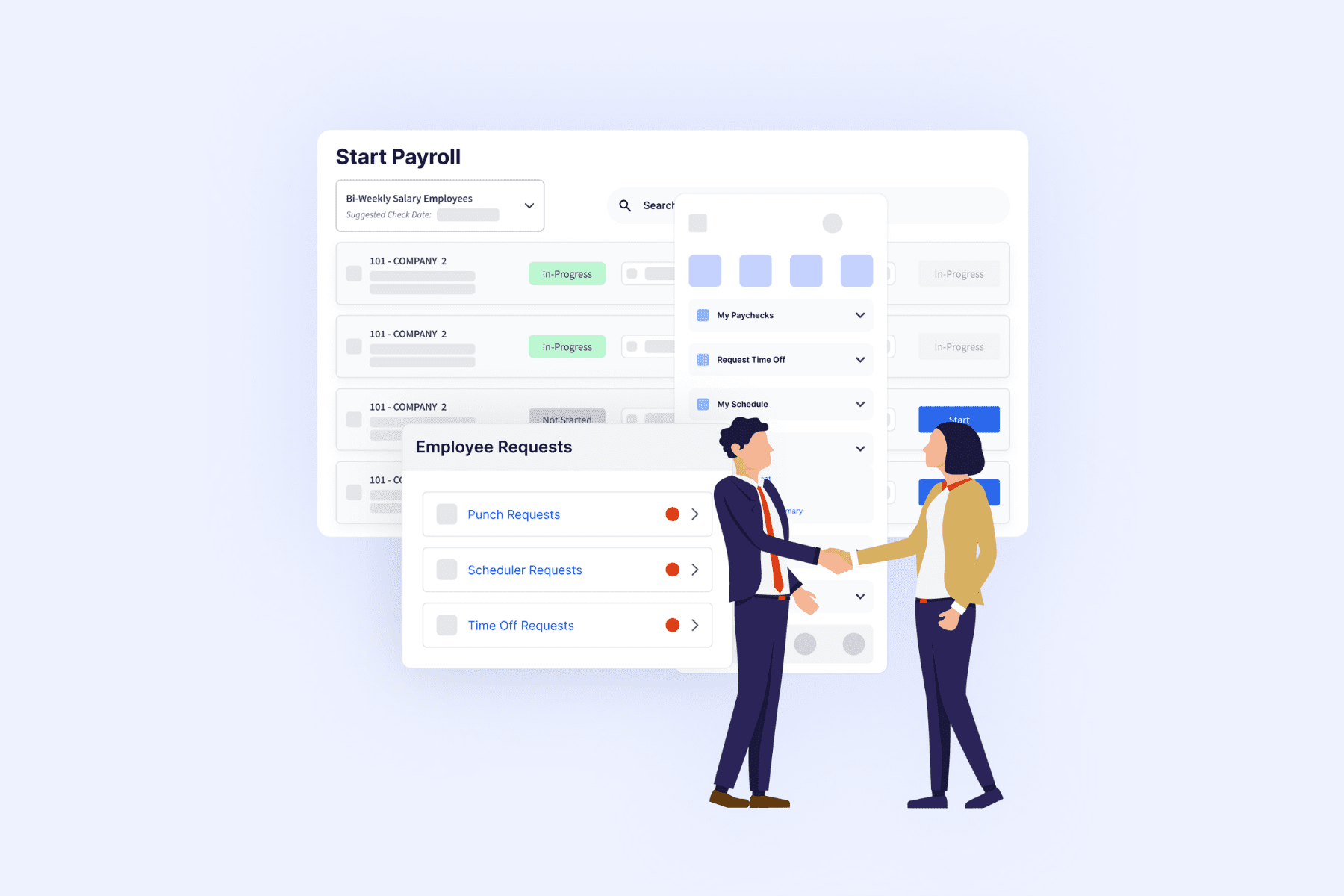
All-in-one HR systems consolidate the core HR and payroll functions (think recruiting, onboarding, time tracking, benefits, performance reviews, and compliance) into a single, centralized platform.
1. Efficiency Through Consolidation
Managing everything from one login eliminates redundant data entry and reduces the risk of errors. Payroll runs faster. Onboarding is less chaotic. HR teams reclaim hours each week, time that can be spent on strategy, not admin.
According to Netchex client data, companies that consolidate into a single platform save up to 16 hours per week on payroll and HR tasks.
2. One Source of Truth for Employee Data
Centralized systems improve data accuracy and security, ensuring that changes to an employee’s status or pay automatically update across all connected functions. This eliminates the version-control nightmares that plague multi-tool setups.
3. Integrated Reporting and Insights
With all data flowing into the same system, reporting becomes more powerful and more accessible. Workforce trends, overtime costs, and retention metrics can be analyzed in minutes, not days.
4. Compliance Confidence
Integrated compliance features, from automated tax calculations to built-in labor law alerts, reduce exposure to fines and lawsuits. Having an audit trail in one place makes responding to regulators far less stressful.
5. Cost Control
While sticker price varies by vendor, all-in-one systems often cost less over time when you factor in the maintenance, integration, and support fees that pile up with multiple systems.
6. One Partner, One Support Team
When something goes wrong, there’s only one number to call. That simplicity matters, especially when payroll is due in a few hours.
7. Better Employee Experience
Modern all-in-one platforms feature self-service portals and mobile apps that empower employees to check pay stubs, request time off, or update benefits on their own. This reduces HR’s inbox volume and boosts employee satisfaction.
The Case for Piecemeal HR Tools: Flexibility and Specialization
On the other side of the debate, best-of-breed or piecemeal HR systems allow organizations to hand-pick the most advanced tools for each function, like applicant tracking, performance management, or learning and development.
1. Depth of Functionality
Specialized systems tend to offer more robust, niche features. For example, a dedicated recruiting platform might have advanced candidate scoring, AI-powered sourcing, or multi-channel job posting not found in generalist HR suites.
2. Flexibility to Swap and Scale
Organizations can add or replace individual tools without disrupting their entire HR tech stack, which is ideal for companies in rapid growth or with evolving needs.
3. Integration Possibilities
Many best-of-breed systems are built with APIs or pre-built integrations, allowing them to sync with payroll, HRIS, or other software. This can create a custom ecosystem, provided IT resources are available to maintain it.
4. Tailored User Experience
A specialized learning platform or benefits portal may offer a more intuitive experience for its particular audience than an all-in-one system’s generalist module.
Market Trends: The Middle Ground Is Emerging
The HR technology market is expanding rapidly, with Grand View Research projecting strong growth in cloud-based HRMS solutions. Several forces are shaping the all-in-one vs. piecemeal decision:
- Cloud Dominance – Cloud deployments offer easier scaling, lower upfront costs, and continuous feature updates.
- Automation & AI – Demand for automation in tasks like payroll reconciliation and candidate screening is pushing adoption of platforms that can integrate AI natively.
- Hybrid Approaches – Many organizations now use an all-in-one platform as the backbone, supplementing it with specialized tools for mission-critical or industry-specific needs.
- Enterprise Customization – Larger companies with big IT budgets often prefer piecemeal setups to fine-tune every function.
Where the Data Points Us
When organizations choose between all-in-one and piecemeal, the deciding factors tend to be:
| Priority | Best Fit |
| Simplicity & efficiency | All-in-One |
| Niche feature depth | Piecemeal |
| Lower total cost of ownership | All-in-One |
| Flexible replacement of tools | Piecemeal |
| Unified reporting | All-in-One |
| Highly customized workflows | Piecemeal |
But the overall adoption trend is shifting toward all-in-one as the primary platform. This is partly because vendors have improved feature depth and integration options, reducing the compromises once associated with all-in-one systems. And as SHRM points out, the problem of “software sprawl” leads to waste in unrealized software returns and tends to undermine the employee experience.
Definition: Software sprawl (sometimes referred to as SaaS sprawl) is a characterization for the use of a large number of apps and software, usually with overlapping features that go ineffectively managed or optimized. In the race to adopt the best of new tech and services, some companies proliferate tools for the sake of “innovation,” thus losing the intended benefits, creating more waste, and introducing even more vulnerabilities.
The Risks of Getting It Wrong
A poorly matched HR tech strategy can create more headaches than it solves:
- Data Silos – Piecemeal tools without proper integration lead to fragmented, inconsistent data.
- Rising Costs – Multiple vendors mean multiple contracts, price increases, and unexpected integration costs.
- Support Delays – When issues cross systems, no one vendor takes full responsibility.
- Adoption Challenges – Complex or disjointed systems frustrate employees and managers, reducing ROI.
Building Your HR Tech Strategy: 5 Questions to Ask
Before making a decision, leaders should weigh these factors:
- What’s Our Primary Pain Point? – If inefficiency and admin overload dominate, an all-in-one platform may be the fastest relief.
- How Complex Are Our Needs? – Niche requirements (e.g., union payroll, industry-specific certifications) might warrant specialized tools.
- What’s Our IT Capacity? – Maintaining multiple integrations requires ongoing tech resources.
- How Important Is Unified Data? – Real-time, organization-wide insights require a centralized source.
- What’s Our Growth Trajectory? – A platform that can scale with you may reduce future migrations.
Why Many Organizations Are Moving to All-in-One
While both models have their place, the more comprehensive benefits of all-in-one platforms are resonating in 2025:
- They streamline administration, freeing HR teams for strategy.
- They improve employee experiences with mobile-first, self-service tools.
- They centralize compliance, reducing legal risk.
- They give leaders a single pane of glass for decision-making.
Netchex embodies these benefits. Built for both hourly and salaried teams, it consolidates hiring, payroll, benefits, compliance, and performance management into a single, intuitive platform. Backed by a U.S.-based support team that “actually shows up,” Netchex offers the efficiency of all-in-one with the service that piecemeal providers can’t match.
Data-Driven Decisions for Long-Term ROI
Choosing between all-in-one and piecemeal HR tools is about aligning technology with your people strategy.
The data tell us this:
- Piecemeal systems still shine for deep specialization.
- All-in-one platforms now deliver enough feature depth to meet most organizations’ needs and bring clear advantages in efficiency, cost control, compliance, and employee experience.
For organizations that value time back, reduced complexity, and actionable insights, an all-in-one platform like Netchex may not just be the simpler choice—it may be the smarter one.
Ready to bring all the benefits of an all-in-one HR and payroll platform to your business? Let’s connect!
Related articles

Solving Auto Dealership HR & Payroll Pain Points: The Best Practices Guide 2025-2026
Human Resources Technology
What’s Next in HR? Top 10 Workplace Trends for 2025